




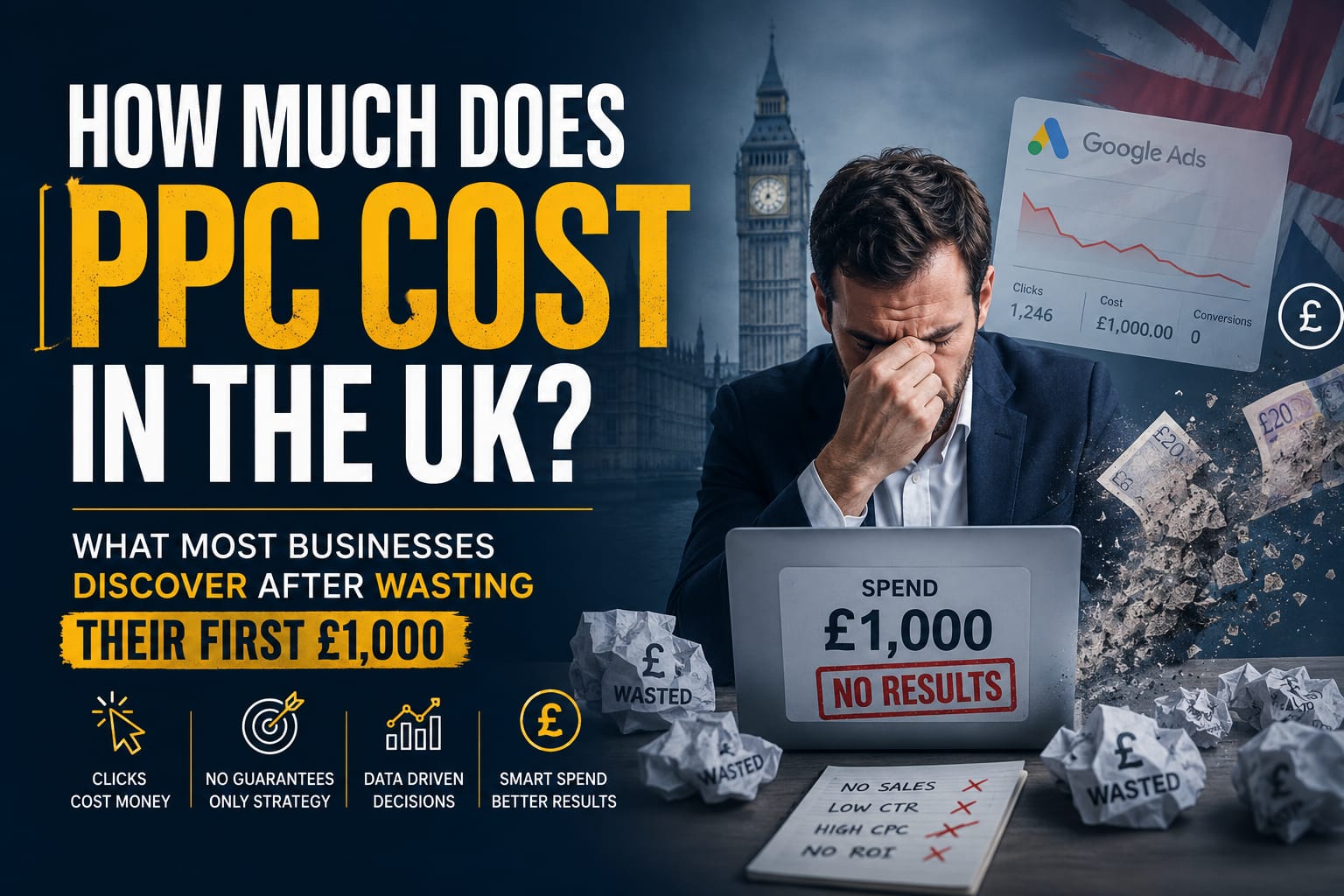
One of the biggest misconceptions about Google Ads is that success comes down to budget. Many businesses enter the world of Pay-Per-Click advertising expecting quick results, only to discover that spending money and generating profitable leads are two very different things.
After investing hundreds or even thousands of pounds, business owners often find themselves asking questions they never considered before. Why are clicks so expensive? Why are competitors ranking above them? Why are enquiries inconsistent? More importantly, how much should PPC actually cost?
The truth is that there is no single answer. Some businesses achieve strong returns with modest budgets, while others spend significantly more without seeing meaningful results. Understanding the real cost of PPC goes beyond average cost per click. It requires understanding competition, keyword intent, campaign quality, and customer value.
This guide explains what businesses in the UK should realistically expect before investing in Google Ads.

1. Why There Is No Standard Price for PPC Advertising in the UK
Many business owners search for an average PPC cost, hoping to find a fixed monthly figure. Unfortunately, Google Ads doesn’t work like a subscription service with a standard package or flat fee. Every campaign operates within a live auction where businesses compete for visibility based on their keywords, industry, location, and ad quality.
For example, a local cleaning company and a mortgage broker may both spend £1,000 per month, yet their results can be completely different. The cleaning company may receive dozens of enquiries, while the mortgage broker may only generate a few high-value leads because competition is significantly stronger.
Factors such as customer lifetime value, search demand, bidding strategies, and landing page quality all influence advertising costs. This is why comparing your budget to another business without understanding the context can often lead to unrealistic expectations and poor decisions.
2. How Google Ads Pricing Actually Works
Understanding how Google Ads pricing works is essential because many businesses mistakenly believe they are simply paying for traffic. In reality, Google Ads operates through an auction system where advertisers compete for visibility whenever someone searches for a keyword.
The amount you pay for a click depends on several factors, including keyword competition, Quality Score, ad relevance, and your competitors’ bids. This means the highest bidder does not always win. Google rewards advertisers who provide useful ads and high-quality landing pages with lower costs and better positions.
For example, two companies targeting the same keyword may pay different prices for the same click. A business with well-written ads, strong click-through rates, and a relevant landing page could pay considerably less than a competitor with poor campaign quality.
This is why PPC costs vary so widely across industries. Understanding how Google calculates costs helps businesses focus on profitability rather than simply chasing clicks or increasing their advertising budget.
3. Average PPC Costs Across Different Industries in the UK
One reason there is no universal answer to the question, “How much does PPC cost in the UK?” is that every industry faces different levels of competition. Some sectors enjoy relatively low click costs, while others compete aggressively for valuable leads.
Businesses operating in home décor, cleaning services, or retail may pay between £0.50 and £3 per click. In contrast, industries such as legal services, insurance, financial advice, and home improvements often experience click costs exceeding £20 or even £50.
The reason is simple. Companies are willing to pay more when a single customer is worth thousands of pounds in revenue. For example, a solicitor securing one new client may generate significantly more income than an online retailer selling a £40 product.
This means expensive clicks are not necessarily bad. What matters is whether those clicks convert into profitable customers. Focusing only on cost per click without considering return on investment can lead businesses to make poor decisions.
4. How Much Should Small Businesses Spend on Google Ads?
One of the most common questions small business owners ask is how much they should budget for Google Ads. Unfortunately, there is no magic number that guarantees success. The ideal budget depends on your industry, goals, location, and customer value.
Many local businesses begin with monthly budgets between £500 and £1,500. This level of investment often provides enough data to understand which keywords perform well and whether campaigns are generating leads. Businesses operating in more competitive industries may require larger budgets to gain meaningful results.
Rather than choosing a number at random, businesses should think about how much a new customer is worth. If a customer generates £2,000 in revenue, spending £100 or £200 to acquire that customer may represent a strong return on investment.
Successful PPC campaigns are built around profitability, not simply spending. A smaller, well-managed budget often delivers better results than a large budget with no strategy behind it.
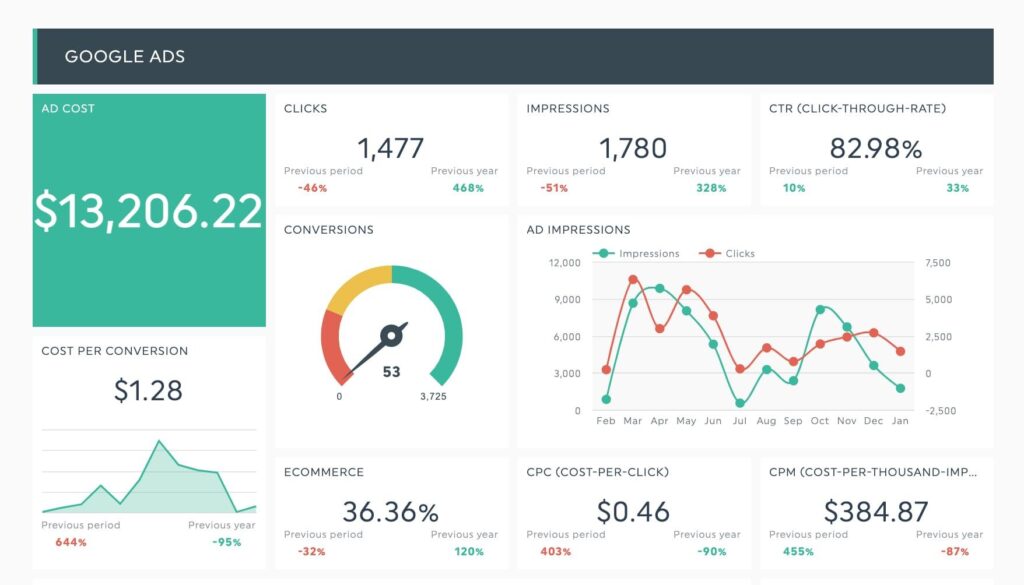
5. Why Some Businesses Pay £5 Per Lead While Others Pay £500
Many business owners become frustrated when they discover that another company is generating leads at a fraction of their cost. This often leads to the assumption that Google Ads is too expensive or that competitors have much larger budgets. In reality, the difference usually comes down to strategy rather than spending.
Lead costs vary because every industry has a different customer value and level of competition. A local carpet cleaner may acquire leads for less than £20, while a solicitor or mortgage broker could easily spend several hundred pounds to secure a qualified enquiry.
Conversion rates also play a major role. Businesses with strong landing pages, compelling offers, and effective follow-up processes often achieve lower costs per lead than companies relying on generic websites. Audience targeting, keyword selection, and campaign structure all influence performance.
The real measure of success is not the cost of a lead but the revenue generated from each customer. A £500 lead can still be profitable if it produces thousands of pounds in return.
6. Hidden Costs Most PPC Articles Ignore
When discussing PPC costs, most articles focus solely on cost per click. However, clicks represent only one part of the overall investment. Businesses often underestimate the additional resources required to turn traffic into profitable customers.
Landing page optimisation is one of the most overlooked factors. Sending visitors to a poorly designed page can dramatically reduce conversion rates and waste advertising spend. High-performing campaigns usually rely on pages specifically built to encourage enquiries and sales.
Tracking is another essential investment. Without conversion tracking, businesses cannot accurately measure which keywords or campaigns are delivering results. Call tracking software, analytics tools, and reporting platforms often add to the overall cost.
Ad copywriting, image design, and ongoing campaign management also require time and expertise. These elements are frequently ignored when calculating budgets.
Understanding these hidden costs helps businesses set realistic expectations and avoid the common mistake of believing that PPC expenses begin and end with paying for clicks.
7. Why Businesses Lose Money on Google Ads
Google Ads has the potential to deliver exceptional returns, yet many businesses lose money because they focus on traffic instead of profitability. Simply attracting visitors does not guarantee sales.
One of the biggest reasons campaigns fail is poor keyword targeting. Broad keywords often attract users who are researching rather than buying, resulting in wasted clicks and low-quality traffic. Without negative keywords, businesses may also pay for irrelevant searches that never convert.
Weak landing pages are another common problem. Visitors expect clear information, trust signals, and an easy path to make an enquiry. If these elements are missing, potential customers quickly leave.
Many businesses also fail to track conversions properly. Without data, it becomes impossible to understand which campaigns are producing revenue and which are draining the budget.
Google Ads rewards businesses that continuously optimise their campaigns. Those that adopt a “set and forget” approach often find themselves spending more while generating fewer results over time.

8. The Biggest Mistakes That Make PPC Expensive
Businesses often assume that rising costs are caused by competition alone. While competition certainly influences pricing, many campaigns become unnecessarily expensive because of avoidable mistakes.
One of the most common errors is targeting broad keywords with low commercial intent. These keywords may generate traffic, but they rarely produce qualified leads. Failing to add negative keywords can further increase wasted spend by attracting irrelevant searches.
Another mistake is sending visitors to the homepage instead of a dedicated landing page. Generic pages usually lack the focused messaging needed to convert users into customers.
Ignoring Quality Score is equally costly. Google rewards advertisers with relevant ads and strong user experiences. Poor campaign quality often results in higher click costs and lower visibility.
Perhaps the biggest mistake of all is neglecting ongoing optimisation. PPC is not something that should be set up once and forgotten. Regular analysis, testing, and adjustments are essential for maintaining profitable campaigns and controlling costs.
9. How Industry Competition Affects PPC Costs
Industry competition is one of the biggest factors influencing PPC costs in the UK. Businesses operating in highly competitive sectors often face significantly higher click prices because multiple advertisers are competing for the same audience. This is particularly common in industries such as legal services, insurance, finance, and home improvements, where a single customer can be worth thousands of pounds.
For example, a local gift shop may pay less than £2 per click, while a solicitor or mortgage broker might spend £30 or more for a single visitor. Although these figures may seem expensive, the value of acquiring a new client often justifies the cost.
Competition also varies by location. Businesses targeting London and other major cities generally face higher advertising costs than companies serving smaller towns or local regions. Understanding your market and customer value is more important than focusing solely on average click prices. High costs do not necessarily mean poor returns if campaigns are generating profitable customers.
10. How Much Do PPC Agencies Charge in the UK?
Many businesses choose to hire a PPC agency because managing campaigns effectively requires time, experience, and continuous optimisation. One of the first questions companies ask is how much agency management costs.
In the UK, PPC agencies typically use three pricing models. Some charge a fixed monthly fee, which often ranges from £250 to £1,500 depending on campaign size and complexity. Others charge a percentage of advertising spend, usually between 10% and 20%. Larger campaigns may involve custom pricing based on specific requirements.
Some agencies also charge an initial setup fee to cover keyword research, competitor analysis, ad creation, and conversion tracking implementation.
Businesses should avoid choosing an agency based solely on price. The cheapest option does not always deliver the best results. Experience, transparency, reporting, and strategic thinking are far more important when evaluating a PPC partner. A skilled agency should help improve profitability, not simply increase traffic.
11. Should You Manage Google Ads Yourself or Hire an Agency?
Google Ads may appear simple at first, but successful campaign management requires more than selecting keywords and setting a budget. Many business owners initially manage campaigns themselves to save money, only to realise that poor optimisation can become far more expensive than agency fees.
Managing PPC internally can work for businesses with marketing experience and enough time to monitor campaigns regularly. However, Google Ads requires constant adjustments, including bid management, keyword refinement, negative keywords, audience targeting, and performance analysis.
Hiring an experienced agency provides access to specialist knowledge and tools that many businesses do not possess internally. Agencies can identify opportunities, reduce wasted spend, and improve conversion rates through continuous testing and optimisation.
The decision ultimately depends on your resources and goals. If your campaigns are generating consistent results and you have the expertise to manage them, handling PPC yourself may be practical. However, businesses seeking growth often benefit from professional support that focuses on maximising return on investment.
12. Practical Ways to Reduce Google Ads Costs
Reducing PPC costs does not always require lowering your budget. In many cases, improving campaign efficiency can deliver better results while maintaining or even reducing overall spending.
One effective strategy is targeting long-tail keywords. These search terms often have lower competition and stronger purchase intent, resulting in better conversion rates. Adding negative keywords also helps prevent ads from appearing for irrelevant searches, reducing wasted clicks.
Improving landing pages can significantly lower customer acquisition costs. Fast-loading pages, clear calls to action, and trust signals encourage visitors to take action rather than leave the website. Audience segmentation and remarketing campaigns can further improve efficiency by focusing on users who are more likely to convert.
Regular campaign reviews are equally important. Analysing search terms, adjusting bids, and testing different ad variations allow businesses to optimise performance over time.
Ultimately, reducing costs is not about spending less. It is about making every pound of advertising spend work harder and generate stronger returns.