


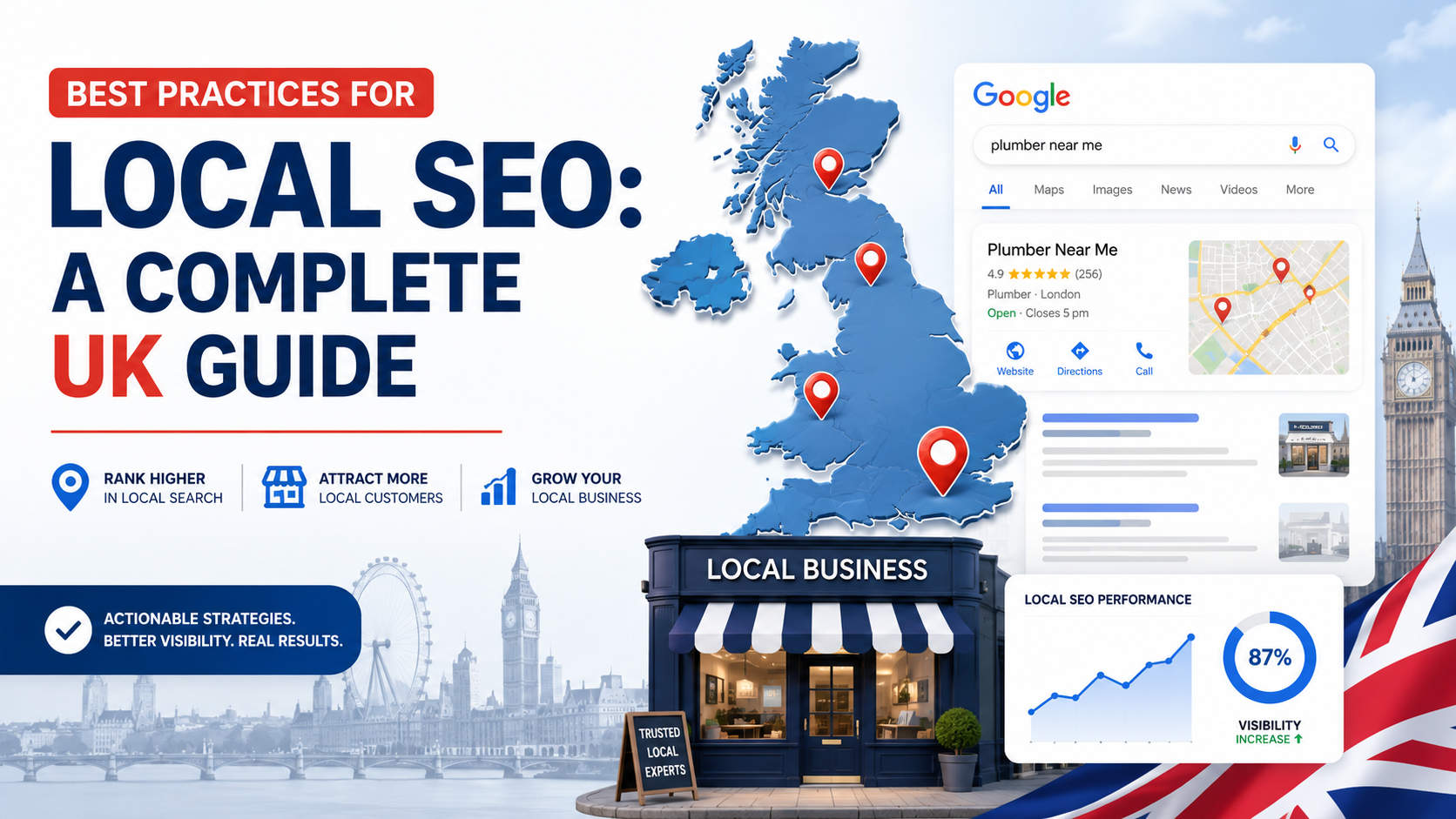
If someone in your town searches for what you sell right now, does your business show up or does a competitor with a weaker offering but a better-optimised listing get the call instead?
That’s the entire game of local SEO. It’s not about outranking the world; it’s about outranking the five or ten businesses actually competing for the same customers in your area. The good news is that local search rewards consistency and attention to detail far more than it rewards budget, which means a well-run local business can genuinely outrank a bigger, better-funded competitor who’s neglecting the basics.
This guide walks through the local SEO best practices that actually move rankings in 2026, in the order most UK businesses should tackle them.
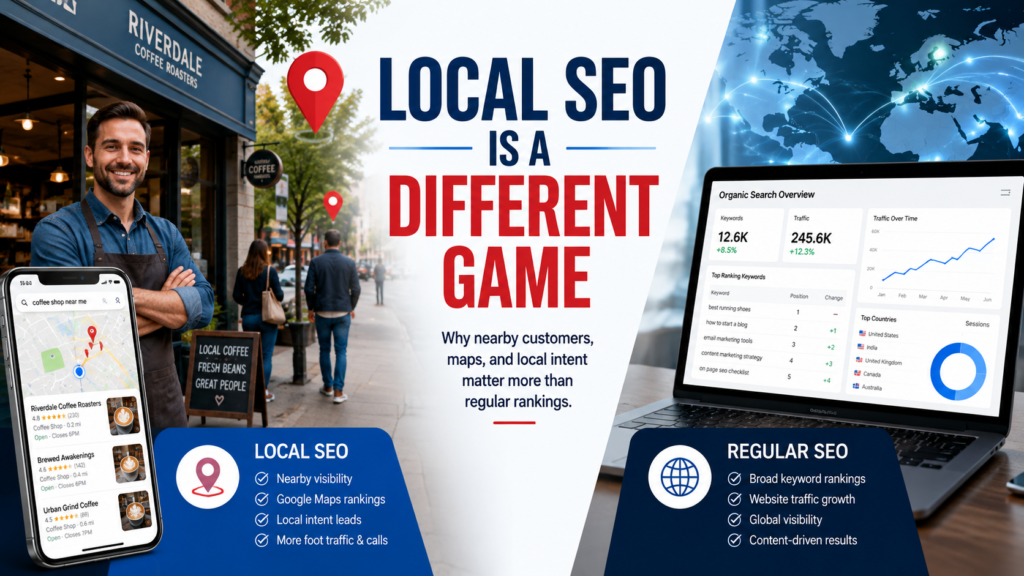
Why Local SEO Works Differently to Regular SEO
Traditional SEO is about ranking a website. Local search engine optimization is about ranking a place and Google evaluates that using a different mix of signals: proximity to the searcher, the completeness and activity of your Google Business Profile, the consistency of your business details across the web, and how satisfied real customers say they’ve been.
That’s why a small local business with a well-optimised Google Business Profile and consistent citations can regularly beat a national brand in the map pack, even if that brand has ten times the domain authority.
1. Get Your Google Business Profile Right First
If you only do one thing from this list, make it this. For most local searches, your Google Business Profile carries more weight than your website.
- Choose the most accurate primary category, and add relevant secondary categories don’t leave this generic.
- Fill in every field: services, products, business description, opening hours, attributes.
- Add fresh photos regularly rather than uploading a batch once and forgetting about it.
- Use Google Posts to share updates, offers, and news profiles that stay active tend to get more visibility than dormant ones.
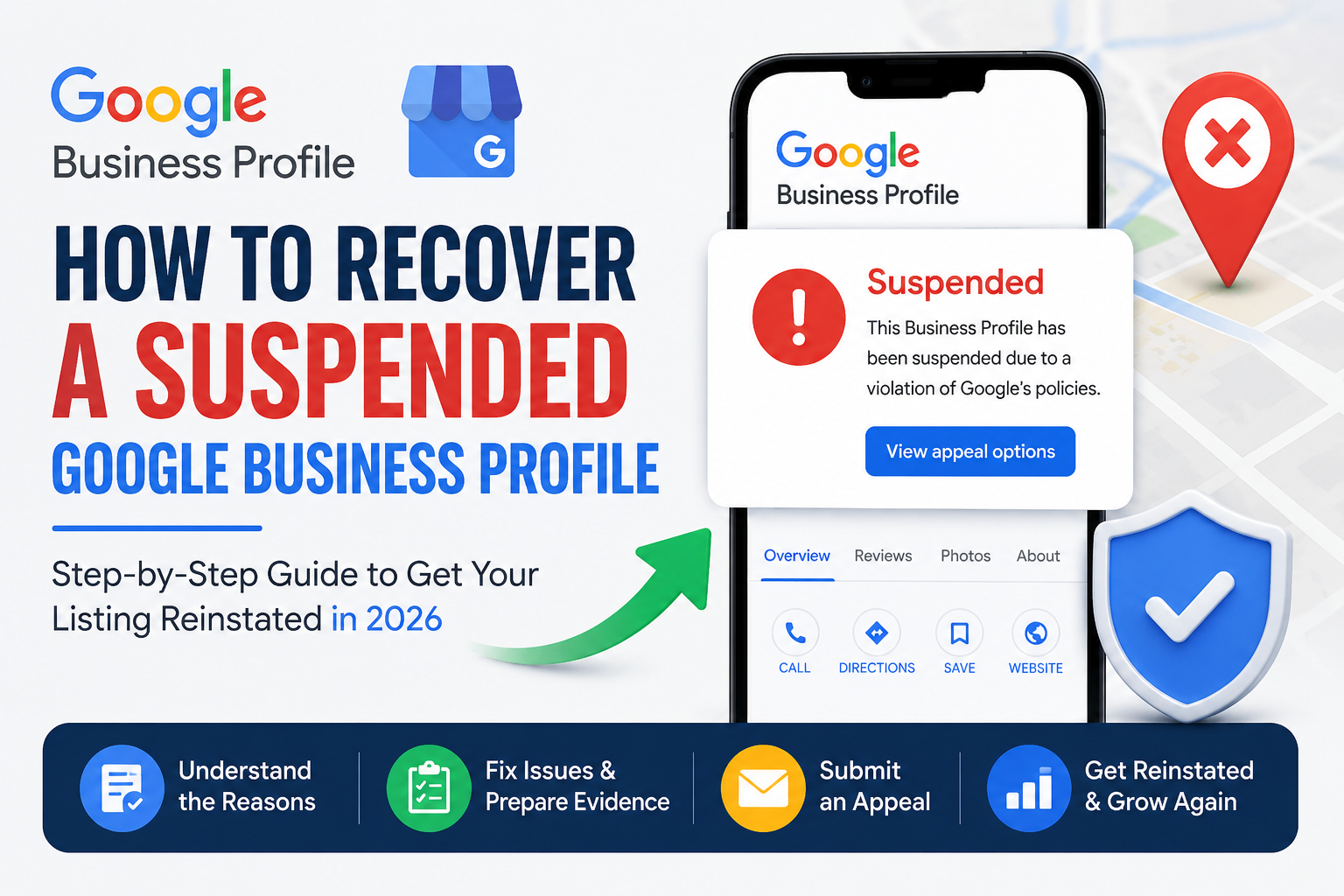
- Keep your listing in good standing. A profile that gets suspended or fails verification loses all the ranking progress it’s built, sometimes overnight. If you’ve run into either issue, it’s worth understanding how to recover a suspended Google Business Profile and what typically triggers a suspension in the first place, so you can avoid repeating the same mistake.
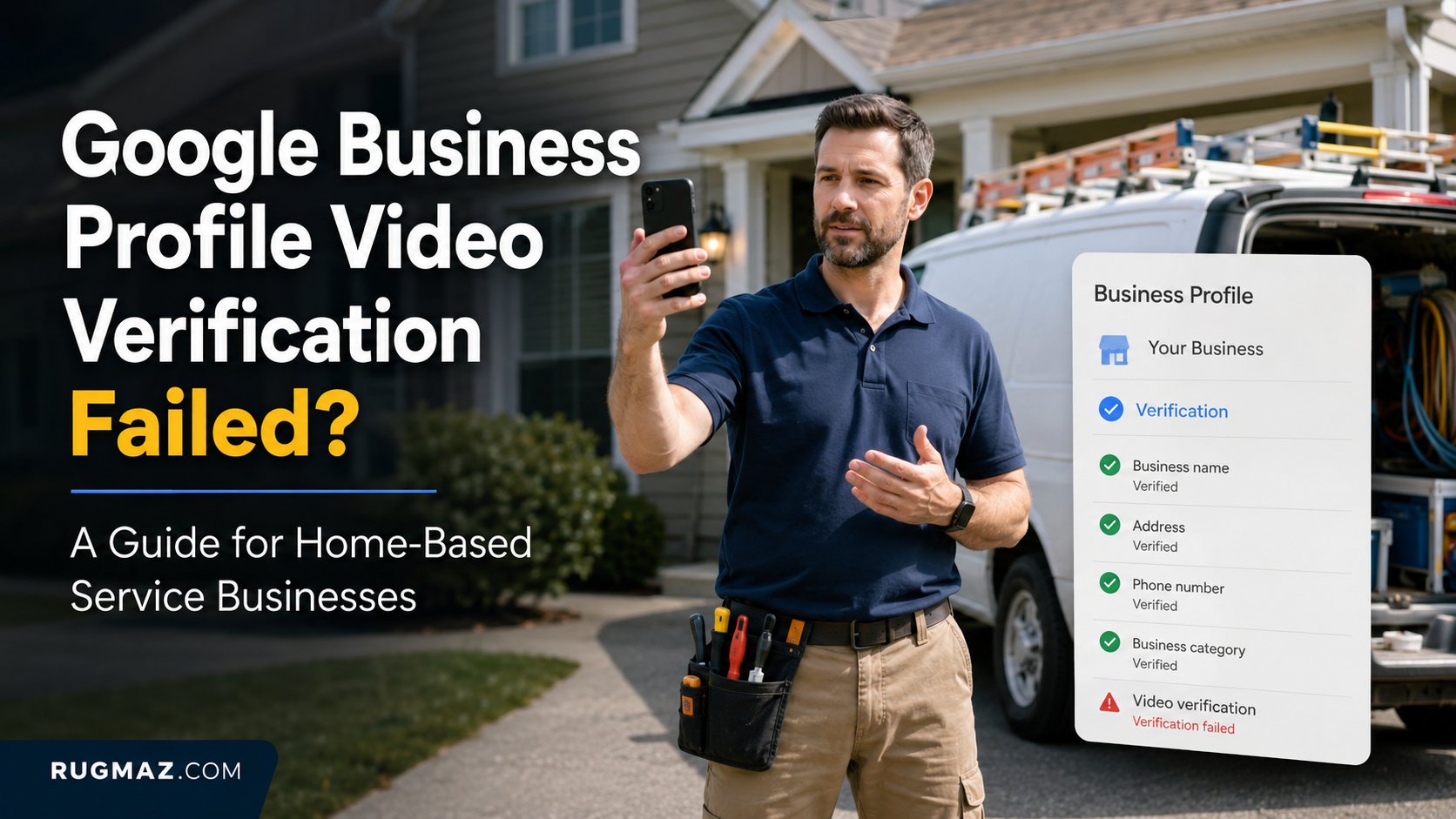
- If you run a home-based or service-area business, video verification is often where things go wrong this guide on fixing failed Google Business Profile video verification covers what Google actually wants to see.
2. Win a Spot in the Local Pack
The “local pack” the map and three-listing block that appears above organic results for local searches gets the majority of clicks on local queries. Google ranks it on three factors: relevance, distance, and prominence.
You can influence all three:
- Relevance: accurate categories, complete service listings, and content that clearly describes what you do.
- Distance: not something you can change directly, but service-area settings and a correct business address help Google understand where you actually operate.
- Prominence: review volume, review quality, citation consistency, and general online visibility.
If your business isn’t appearing on the map at all not just ranking low, but genuinely missing that’s usually a fixable technical or profile issue rather than a ranking problem. This breakdown of why businesses stop showing on Google Maps covers the most common causes worth checking first.
3. Build Location-Specific Landing Pages
If you serve more than one town, area, or postcode, resist the urge to cram every location onto a single “areas we cover” page. Google generally rewards dedicated, genuinely useful pages for each area over a thin list.
Each location page should include:
- The specific services offered in that area
- Local landmarks, postcodes, or neighbourhoods (used naturally, not stuffed)
- Unique content not a copy-pasted template with only the town name swapped
- A clear call to action and contact details
This is one of the most common gaps found during a local SEO audit: businesses have great national content but nothing built specifically around the towns and postcodes they actually want to rank in.
4. Keep Your NAP Consistent Everywhere
NAP Name, Address, Phone number needs to match exactly across your website, Google Business Profile, and every directory you’re listed on (Yell, Checkatrade, Thomson Local, industry-specific directories, and so on).
Inconsistencies “St.” in one place and “Street” in another, an old phone number lingering on a directory you forgot about create confusion for Google about which business (or even which location) is the real one. Run a citation audit at least twice a year; businesses that have moved, rebranded, or changed numbers are especially prone to this.
5. Don’t Neglect the Technical Foundations
Local SEO best practices don’t replace core technical SEO they sit on top of it. If your website has fundamental issues (slow load times, broken indexing, poor mobile experience, missing structured data), no amount of local optimisation will fully compensate.
Local businesses should specifically check:
- LocalBusiness schema markup on the homepage and location pages, so Google can parse your business details directly
- Mobile page speed, since the majority of local searches happen on mobile devices
- Indexing status in Google Search Console for every location page you’ve built
If your site simply isn’t ranking at all not just for local terms, but broadly it’s worth working through this wider list of reasons a website fails to rank on Google before assuming the problem is local-specific.
6. Treat Reviews as an Active Ranking Strategy, Not an Afterthought
Review count, review recency, and average rating all factor into local pack visibility and reviews influence potential customers just as much as they influence Google.
A few practices that consistently work:
- Ask for reviews at the natural moment of highest satisfaction (right after a completed job, delivery, or positive interaction) rather than in a generic bulk email months later
- Respond to every review, positive and negative a thoughtful reply to a negative review often does more for trust than the review itself does damage
- Never buy or fake reviews; Google’s spam detection has become very effective, and getting caught can mean a suspended profile
7. Optimise for “Near Me” and Mobile-First Behaviour
A huge share of local search happens as “[service] near me” on a phone, often with immediate intent. To capture this:
- Make sure your address, phone number, and hours are impossible to miss on mobile
- Add click-to-call buttons and a tappable map link
- Keep your Google Business Profile hours accurate, including holiday hours nothing frustrates a “near me” searcher faster than turning up to a business that’s actually closed
8. Handle Multi-Location and Service-Area Businesses Correctly
If you operate from a fixed premises in each town, each location typically needs its own Google Business Profile and its own landing page. If you’re a service-area business without a public storefront (plumbers, cleaners, mobile mechanics), you’ll set your service areas within a single profile instead and getting this configuration wrong is a common cause of visibility problems, particularly around verification.
9. Track What’s Actually Working
Local SEO is genuinely different from national SEO in how you measure it. Track:
- Local pack rankings for your priority keywords, checked from within your actual service area (not from your office if that’s outside it)
- Google Business Profile insights: calls, direction requests, website clicks
- Review count and rating trend over time
- Organic traffic to location-specific landing pages
If you’re unsure whether your current results justify continued in-house effort or outside help, this guide on when it makes sense to hire an SEO consultant lays out the signals worth weighing. And since search behaviour itself is shifting, it’s also worth understanding how AI-driven search is changing SEO local businesses are increasingly being surfaced through AI Overviews and conversational search, not just the traditional blue links.
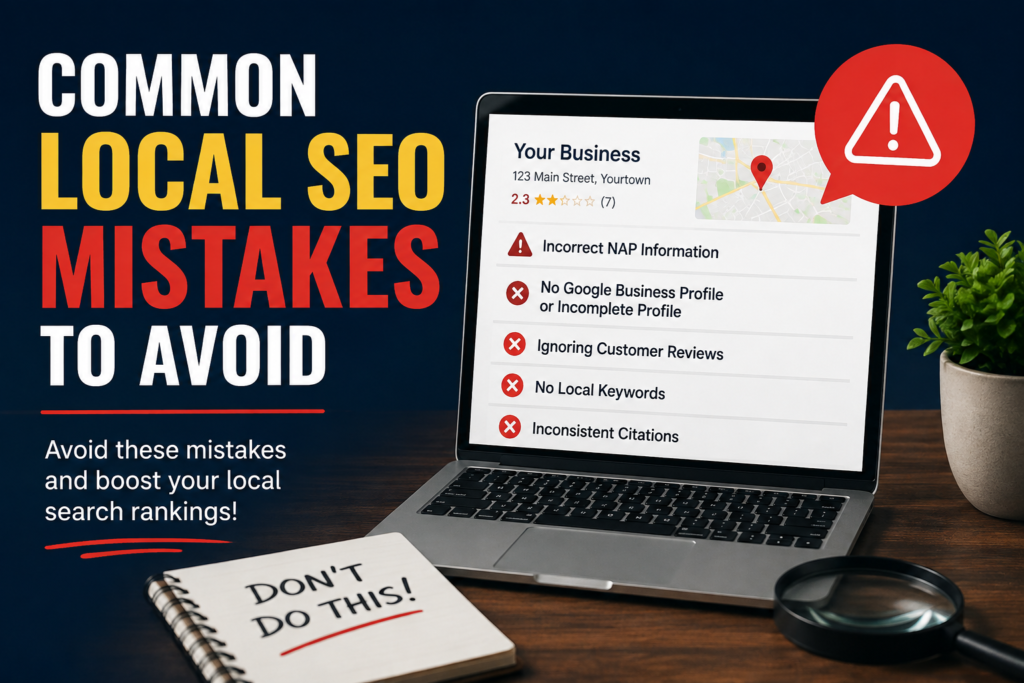
Common Local SEO Mistakes to Avoid
- Leaving Google Business Profile fields incomplete because “the website has that information anyway”
- Using a virtual office address or a PO box, which violates Google’s guidelines and risks suspension
- Duplicate or near-duplicate location pages with barely-changed content
- Ignoring negative reviews instead of responding
- Inconsistent NAP details across directories that haven’t been touched in years
- Treating local SEO as a one-time setup rather than an ongoing process
Final Thoughts
Local SEO best practices aren’t complicated individually a complete Google Business Profile, consistent NAP details, genuine reviews, and location-specific content will take most businesses further than any of the shortcuts on offer. The businesses that struggle are usually the ones that set things up once and never revisit them, or that skip the profile-level basics while chasing more advanced tactics.
If you’d rather have a second set of eyes on your current local setup, our local SEO and search visibility services are built specifically around fixing the issues covered in this guide from Google Business Profile problems through to technical and content gaps.
Frequently Asked Questions
How long does local SEO take to show results?
Most businesses see measurable movement within 3–6 months, though highly competitive areas or industries can take longer. Google Business Profile changes tend to show impact faster than website or citation changes.
Is Google Business Profile more important than my website for local SEO?
For map pack visibility specifically, yes it’s usually the single biggest factor. But your website still matters for organic rankings below the map pack and for converting the traffic your profile sends you.
Do I need a landing page for every town I serve?
If you’re actively trying to rank in a town not just technically willing to travel there yes, a genuinely useful, unique page for that area outperforms a generic “areas covered” list.
Can local SEO work without spending money on paid ads?
Yes. Local pack rankings are entirely organic. Paid ads (Local Services Ads, Google Ads) can supplement local visibility, but they’re not required for strong organic local rankings.